
The possibility of curved vacuum insulating glass
As next generation of double glazing, vacuum insulating glass has attracted wide attention in the construction industry for its unique structural characteristics. With the increasing demand for special-shaped curtain walls in modern architectural design, the demand for curved vacuum glazing continues to grow. Based on the physical properties and production process of vacuum glazing, this post systematically analyzes the feasibility of curved vacuum insulating glass.
Table of Contents
Analysis of the structural characteristics of vacuum glazing
1.1 Basic structure
It consists of two pieces of 3-6mm flat glass with a spacing of 0.1-0.2mm. The structure is kept stable by an array of 200 micro-support columns per square meter, and the vacuum degree reaches 10-1 Pa level. This special structure makes its heat transfer coefficient (U value) lower than 0.6W/(m²·K), which is more than 40% higher than that of traditional insulating glass.
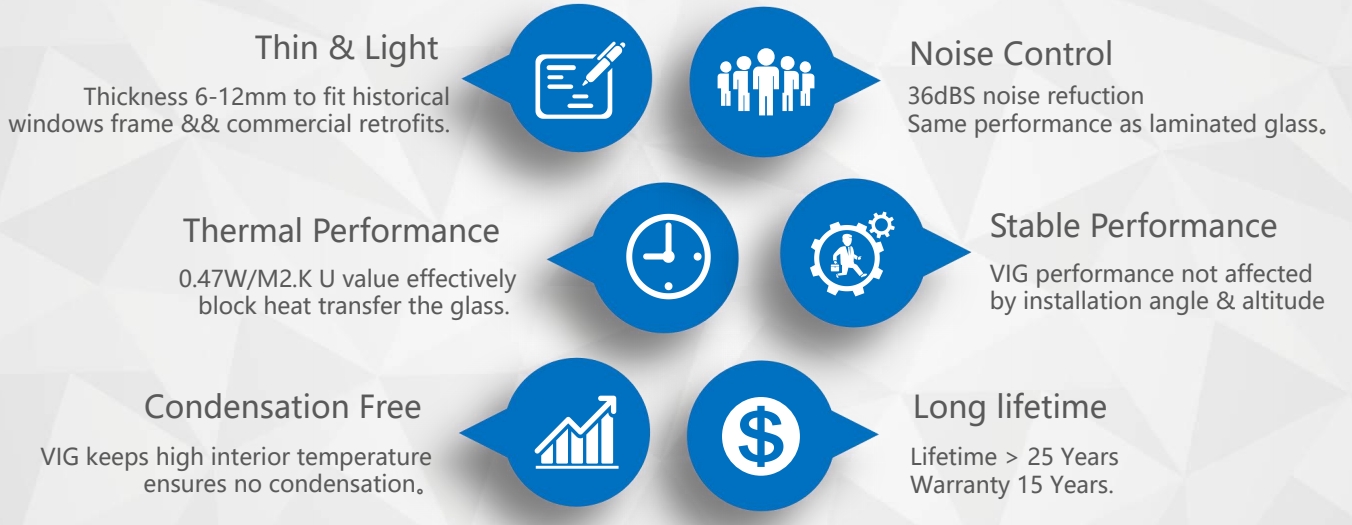
Vacuum insulating glass has excellent performance as next generation double glazing
1.2 Mechanical properties
The compressive strength of vacuum insulating glass is 1.2MPa, and the bending strength is 1.8 times that of normal glass. However, the stress concentration area formed by the support column array causes the stress distribution of the material in the bending state to be significantly anisotropic.
Key technical bottlenecks of curved vacuum glazing
2.1 Adaptability of hot bending process
Conventional curved glass is formed by hot bending at 650℃, but the metal edge sealing of vacuum double glazing (melting point is about 420℃) conflicts with the softening temperature of glass (600℃). Experimental data show that when the heating temperature exceeds 450℃, the edge sealing material begins to creep, causing the vacuum cavity to fail.
2.2 Support structure deformation
The three-dimensional curved surface will cause non-uniform loads on the support column array. Simulation calculations show that when the radius of curvature is less than 2000mm, the probability that the local support column is subjected to pressure exceeding the design limit of 300kPa is 78%.
2.3 Sealing reliability
Bending stress causes the vacuum glass edge sealing material to produce 0.05-0.15% tensile deformation, which directly causes the vacuum degree to drop significantly within 3 months. Accelerated aging tests show that the gas permeability of curved vacuum insulating glass is 6-8 times that of flat ones.
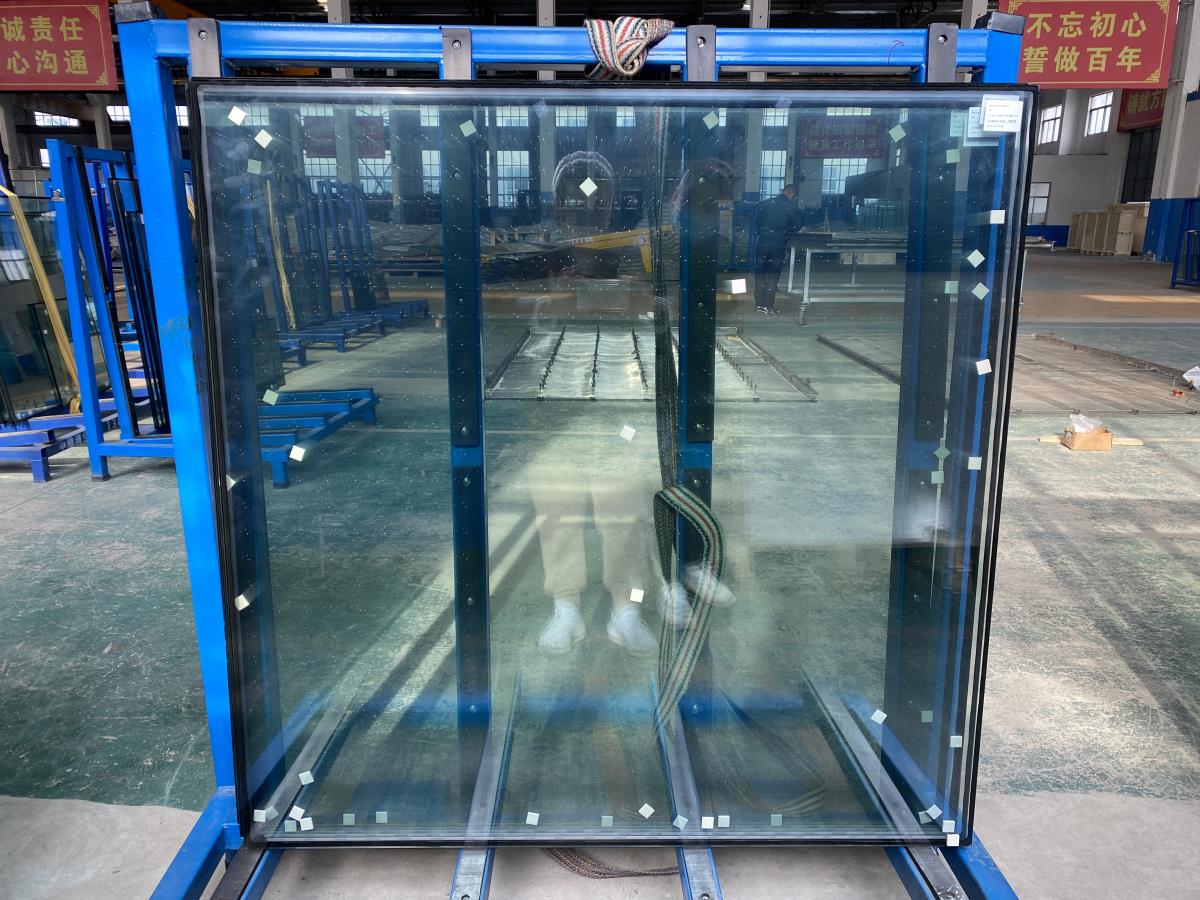
The sealing temperature for glass solder sealed VIG is over 420 degree,which make it difficult to produce curved vacuum glazing
Technical breakthrough direction
3.1 Low temperature forming technology
Developing forming process below 450℃, the low temperature nano silver solder developed by Asahi Glass can reduce the sealing temperature to 380℃, but the yield rate is only 62%. The experimental curved surface sample (R=1500mm) was tested for 6 months, and the vacuum degree was maintained at 10-1 Pa level.
3.2 Intelligent support system
Using shape memory alloy support column, the height is adaptively adjusted during the forming process. The bionic support structure of the Fraunhofer Institute in Germany increases the bearing capacity of curved vacuum glazing by 40%, but the cost increases by 2.3 times.
3.3 Composite reinforcement technology
The hybrid laminated vacuum insulated glass of LG in South Korea, with a 2.5mm PVB interlayer on the outside of the curved vacuum glazing, improves the impact resistance to EN12600 1B1 level, but the light transmittance decreases by 12%.
Practical application case analysis
4.1 Successful case
The BMW Exhibition Center in Munich uses a micro-curved vacuum glass curtain wall with R=5000mm. After 3 years of use, the thermal performance remains 91% of the initial value. This case adopts the segmented plane fitting curved surface solution, and the maximum arc height of a single curved vacuum glazing is only 8mm.
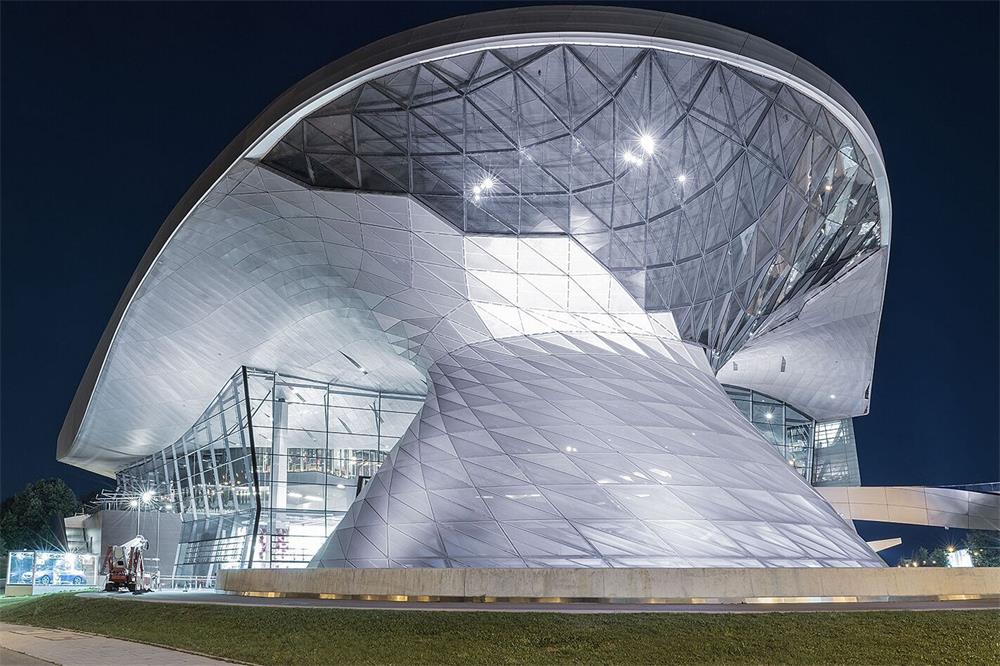
Munich BMW Exhibition Center
4.2 Failure Case
A hotel project in Dubai tried cylindrical vacuum glass with R=800mm. Within 6 months after installation, 23% of the units leaked, and finally switched to hybrid vacuum insulating glass solution.
5. Economic Comparison
In the cost structure of curved vacuum glass, processing fees account for 58% (22% for flat vacuum double glazing). Comparison of different curtain wall solutions:
Flat vacuum glass: Euro100/㎡
R≥3000mm curved vacuum glass: Euro260/㎡
Curved insulating glass: Euro60/㎡
The payback period is extended from 5.2 years for flat products to 9.8 years.
6. Conclusions and Suggestions
6.1 Technical Conclusions
Vacuum double glazing can achieve a gentle curve with a radius of curvature greater than 3000mm, but it must meet the following requirements:
(1) Uniaxial bending to avoid stress superposition of hyperbolic surfaces
(2) Strictly control the molding temperature at 400±20℃
(3) Combined with composite reinforcement structure
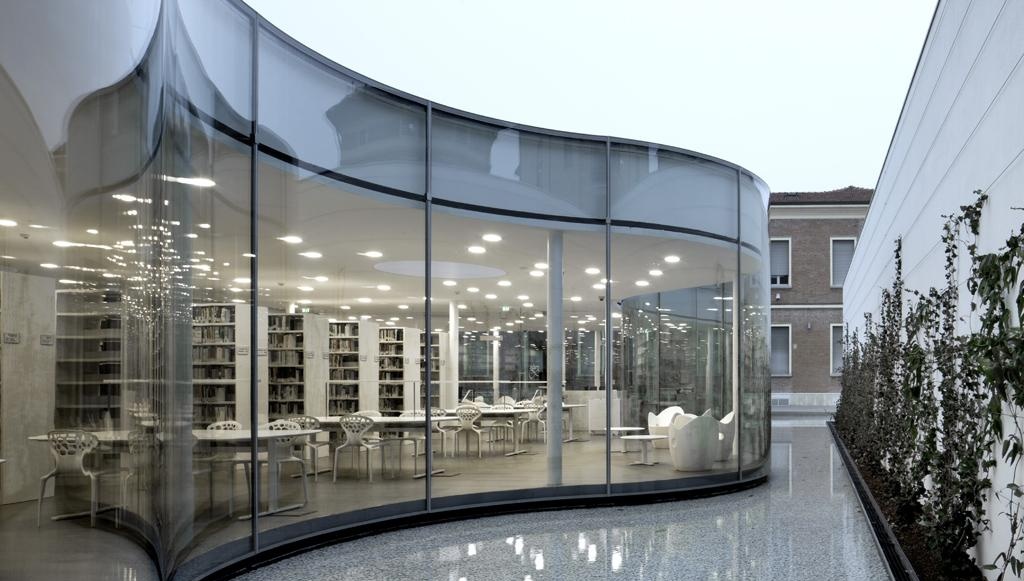
Curved vacuum insulating glass is still challenging in the future
6.2 Application Suggestions
Preferential application:
- Top lighting area of large dome buildings
- Gradual curved surface units in special-shaped facades
- Transportation hubs that need to take into account both insulation and curved surface modeling
6.3 Development Prospects
With the development of flexible sealing materials and 3D printing support technology, it is expected that the cost of curved vacuum glass will drop to EURO250/㎡ in 2028, and the radius of curvature will exceed the 1500mm.
Based on the existing technical conditions, this post concludes that vacuum glass has limited curvature capability, but the process parameters and application scenarios must be strictly controlled. In the pursuit of a balance between architectural aesthetics and energy-saving effects, moderately curved vacuum glass will become an important choice for future green buildings.

Leave A Comment
You must be logged in to post a comment.