
Demystifying Vacuum Glazing – Your Secret Weapon for Sustainable Buildings
Table of Contents
Forget Double Glazing. The Future is Vacuum.
As a vacuum glass specialist navigating the global construction market, I constantly encounter the same question: “Vacuum glazing? Sounds fragile and expensive. Why should I choose it over traditional double glazing?” Let’s cut through the hype and delve into the science and tangible benefits that make vacuum insulating glass (VIG) a revolutionary force in sustainable architecture.

youtube-logo-haanglas
The Core Principle: Harnessing the Power of Nothing
Imagine the insulating power of a thermos flask applied to your window. That’s the essence of VIG. The magic lies in creating a near-perfect vacuum – less than 0.001 Pa – sealed between two panes of glass. Why is this vacuum so crucial?
Eliminating Convection & Gas Conduction: In double glazing, argon or krypton gas, while better than air, still allows heat to transfer via gas molecule collisions (conduction) and currents (convection). A vacuum removes all gas molecules, virtually eradicating these heat transfer paths.
Minimizing Conduction: Heat can still travel through direct contact points. VIG solves this with incredibly small, precisely spaced support pillars (typically 0.3-0.5mm diameter, spaced 20-40mm apart) made of materials like stainless steel or ceramic. These pillars are virtually invisible to the eye but strong enough to withstand atmospheric pressure, minimizing thermal bridging.
The Undeniable Advantages: Performance Speaks Volumes

vig advantages -vacuum glazing
- Unmatched Thermal Insulation (Low U-Values):
This is VIG’s crown jewel. While premium double glazing might achieve U-values around 1.0 – 1.2 W/(m²K), high-performance vacuum glazing consistently hits 0.4 – 0.7 W/(m²K), rivaling the insulation of a well-insulated wall! This translates directly to dramatically reduced heating and cooling costs year-round.
- Slim Profile, Maximum Light:
Achieving such low U-values doesn’t require thick cavities. VG units are remarkably slim (typically 6-10mm total thickness), preserving valuable interior space and maximizing visible light transmission (often exceeding 80%). This is a game-changer for renovations where window rebates are limited.
- Superior Condensation Resistance:
The warm interior pane surface significantly reduces the risk of condensation forming on the glass during cold weather, improving comfort and preventing mold growth. Internal condensation within the unit is impossible due to the desiccant-free vacuum.
- Outstanding Acoustic Performance:
The vacuum cavity acts as a highly effective sound barrier, particularly against medium to high-frequency noises (traffic, voices), contributing to a quieter, more peaceful indoor environment. Sound Reduction Index (Rw) values often exceed 40 dB.
- Long-Term Stability & Durability:
Modern VIG utilizes advanced glass frit edge sealing techniques and robust getter materials to maintain the vacuum integrity reliably for decades. Lifespans exceeding 25 years are confidently expected based on accelerated aging tests.
- Sustainability Champion:
By drastically reducing building energy consumption for heating and cooling, VG directly lowers carbon emissions. Its slim profile also reduces material usage and transport footprint compared to bulky triple glazing achieving similar performance.

Vacuum glass installation
Addressing Common Concerns
- “Isn’t it fragile?”
Modern VIG uses tempered or heat-strengthened glass. The support pillars are meticulously designed to distribute pressure evenly. It meets stringent international safety standards (e.g., EN 12150, EN 12600).
- “Is the cost justified?”
While the initial unit cost is higher than standard double glazing, the dramatic energy savings over the window’s lifespan, combined with potential space savings and increased property value, deliver an excellent long-term ROI. It’s an investment, not just an expense.
- “Can it handle large sizes?”
Manufacturing capabilities are continuously improving. While size limitations exist compared to double glazing, commercially available VIG panels are perfectly suitable for most residential and many commercial applications, including curtain walls,Now HaanGlas offer the Maximum 1600*3000mm VIG.
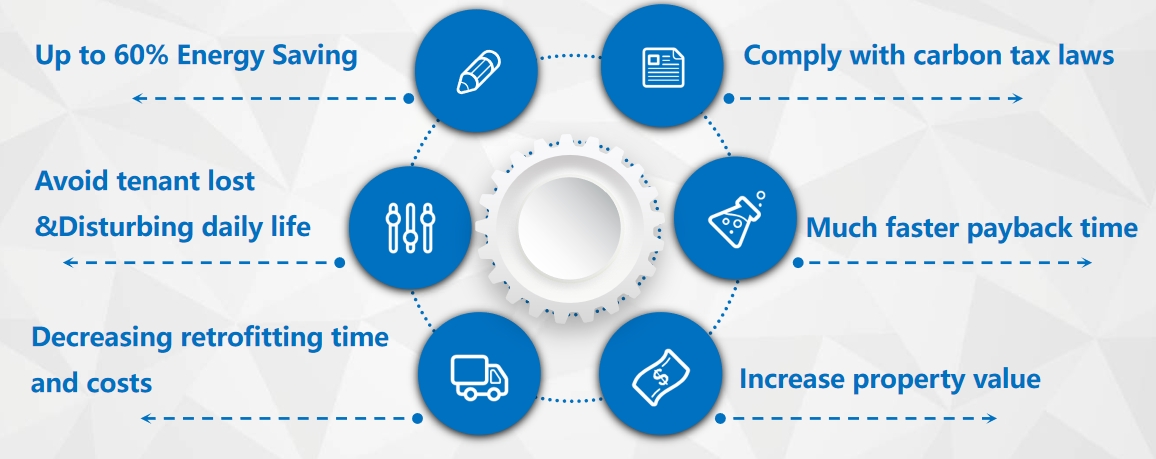
Benefit from VIG-VACUUM GLAZING
Real-World Applications: Where Vacuum Glazing Shines
- Energy-Efficient Retrofits: The slim profile is ideal for upgrading single-glazed historic buildings or double-glazed units without altering frames.
- Passive house & Net-Zero Buildings: Essential for achieving the ultra-low U-values required.
- Cold Climates: Preventing significant heat loss through windows.
- Hot Climates: Reducing solar heat gain (when combined with Low-E coatings) and cooling loads.
- Noise-Sensitive Areas: Near airports, busy roads, or city centers.
- Space-Constrained Designs: Balcony glazing, slim sliding doors, display cases.

VIG TIMES COMING
The Verdict: Beyond Hype, Into the Future
Vacuum glazing isn’t science fiction; it’s commercially available, high-performance technology delivering measurable, significant benefits. It represents a fundamental leap in window insulation physics. For architects, builders, developers, and homeowners serious about energy efficiency, comfort, space optimization, and sustainability, vacuum glazing is no longer a niche product – it’s a strategic solution for the future of building envelopes.
As the global demand for sustainable construction surges, understanding and specifying this technology positions you at the forefront of innovation. It’s not just a window; it’s an invisible fortress protecting your comfort and our planet’s resources.
Ready to explore how vacuum glazing can transform your next project? Let’s discuss the specific performance characteristics and solutions available for your market.

Leave A Comment
You must be logged in to post a comment.